
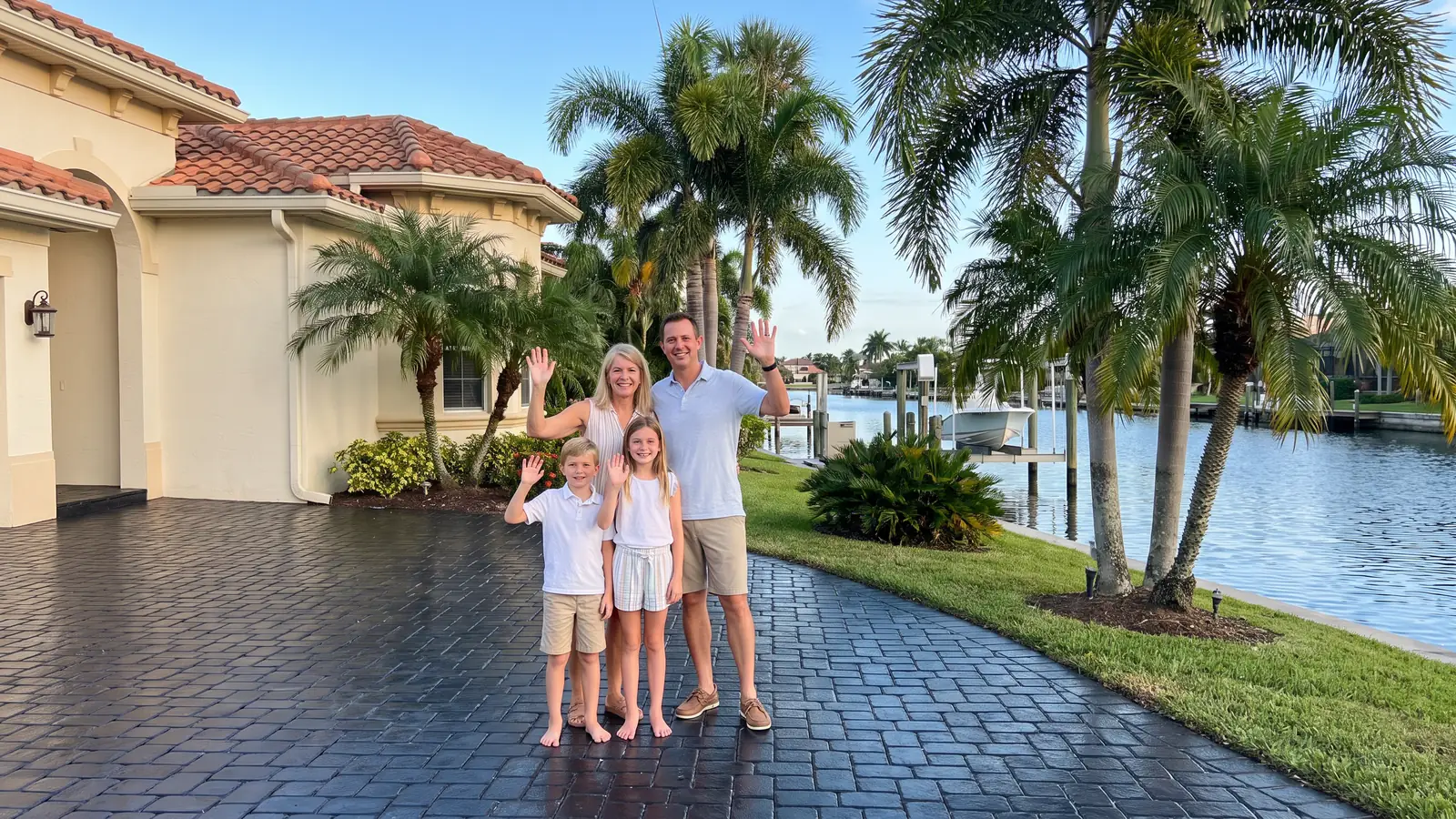
Paver sealing for Orange City homes
Paver Sealing in Orange City, FL
Orange City pavers near the Historic District and Blue Spring can look new again, so dial (386) 666-4204 for a quote.
- Brings out deeper paver color
- Fresh joint sand helps lock pavers in place
- Gives weeds less room to grow
- Makes the surface easier to keep clean
- Free estimate, no obligation
Request a Free Estimate
Free, no obligation.
Fast, careful paver sealing in Orange City
Paver sealing is available in Orange City, from the older streets by the Historic District to the newer lots near Interstate 4. A local contractor washes, re-sands and seals driveways, walks and pool decks around Orange City, and you get a free estimate. If you call (386) 666-4204, you will hear back within 1 business day, usually much sooner.
Think of the paver walk that used to be a clean red or tan and now looks tired. The joints have thinned out, some weeds have rooted, and the color has gone flat in the sun. Washed, re-sanded and recoated, it can read as a single shade again. To start the conversation, you can phone (386) 666-4204.
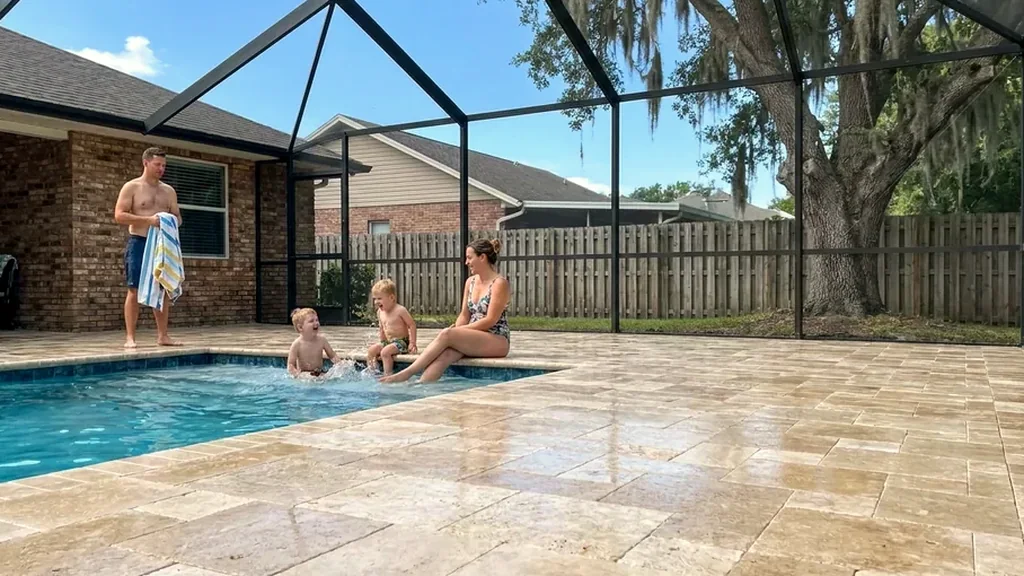
Why hire a local paver sealing contractor in Orange City?
Orange City homeowners tend to choose a local paver contractor because many lots here are older, and older pavers need a closer look than a new slab. To hear what that means for your yard, ask for a free estimate.
A free walk around
The contractor looks over your Orange City pavers at no charge. You do not need to be home for the estimate, and you get a written price. A written copy of the notes stays with you.
A range you can compare
Published figures for this part of Florida run $1.50 to $3.00 per square foot to clean, sand and seal. Hold any Orange City bid against it. A bid well under it is worth one more question.
Picking matte or glossy
Matte looks natural and hides scuffs. A wet look deepens color but shows wear sooner. You choose after seeing both. Seeing the finish on a small patch first is a fair request.
Your call from start to finish
The date, the finish and the go-ahead are yours. An Orange City estimate comes with no obligation. Saying no costs nothing, and the notes remain yours.
Get Your Free Estimate in Orange City
Tell us about your pavers in Orange City.
Free, no obligation
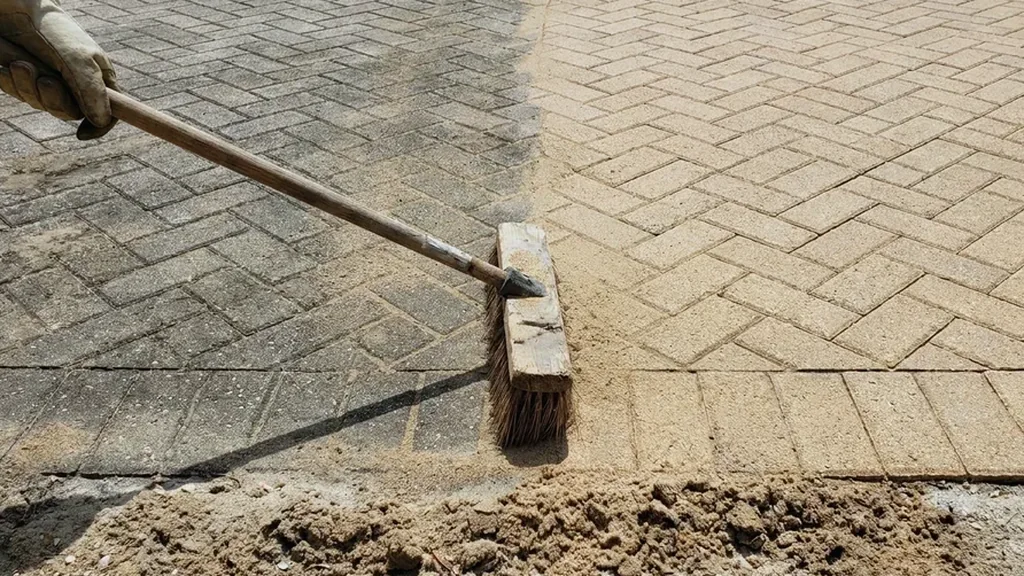
What paver problems show up most in Orange City?
Joints that thinned over the years
Orange City has older homes, and the 2020 census counts 6,561 housing units across just 7.2 square miles. Pavers laid years ago often have joints that have lost sand. Lost sand widens the gap, lets soil in and gives weeds a start. New sand goes in after the wash. Orange City mixes a historic core with newer streets, so one block can show several paver ages. The contractor reads each yard on its own. A decades-old walkway and a newer patio call for different plans, and the estimate says which is which. The 2020 census counted 5,791 households in Orange City and found 11.7 percent of housing units vacant. A vacant home still collects green film and weeds. Pavers there are worth a check before the next sale or move.
Heavy summer rain
DeLand, nearby in Volusia County, averages 55.49 inches of rain a year, and June through September is the wettest stretch. Short, hard downpours push sand out of unsealed joints. A sealed surface sheds water and holds the sand better. Short bursts of rain can strip an exposed joint in one afternoon. The wash and re-sanding fix it, and the coat helps hold it. Check the corners near downspouts, where sand tends to wash away first, and mention them at the visit. DeLand, nearby in Volusia County, logs about 130 days a year with at least a hundredth of an inch of rain. That many wet days keep pavers damp and fill joints with fine silt. The wash clears both.
Sun fade on tan and red pavers
Summer highs in this part of Volusia run near 90 degrees from June to August. One Jacksonville company reports that bare pavers lose visible color in 3 to 5 years under Florida sun. Sealing deepens the color and slows the next round. Tan and red concrete pavers show fade fast along sunny front walks. A coat brings back depth that a plain wash cannot. Choose the finish with the contractor before the job starts, since changing it later means stripping the old coat. Summer highs near 90 degrees from June to August bake the surface, and the record high at DeLand is 102. Dark pavers hold that heat. A sealed surface sheds some of the wear that heat adds.
Green film in the shade
Moss and algae should stay off pavers unless a spot is heavily shaded. In Orange City that usually means the north side of a house or a walkway under a canopy. Those spots are washed first and checked again at the end. Moss and algae also follow downspouts and the damp edge of a lawn. A shaded corner by a hedge is a typical spot. After the wash, trimming growth back helps the surface stay clean for longer. Orange City sits near Blue Spring, where about 102 million gallons of 73-degree water flow into the river each day. Humid Florida air can slow drying, which is why dry time gets extra patience.
Rust-colored irrigation stains
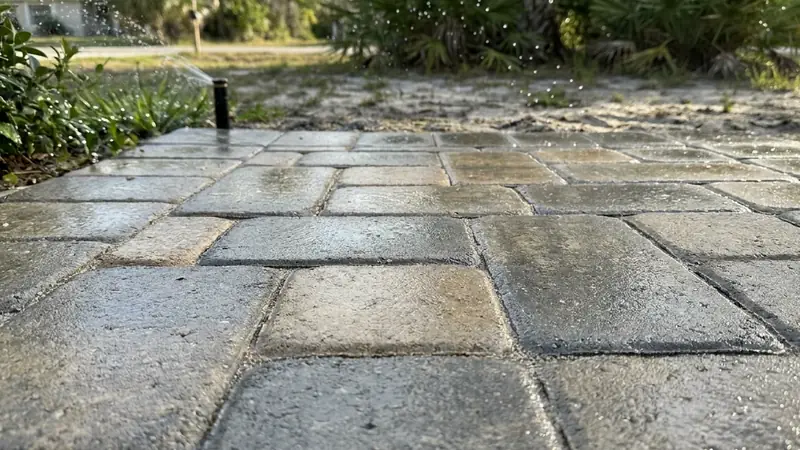
University of Florida guidance says most Florida well water carries a lot of iron, and irrigating with it leaves orange stains. Sprinklers that spray the drive can leave that mark. Rust is treated before sealing, though deep stains may not come out fully. Rust marks usually start at the lawn edge or near a planter. If the sprinklers hit the walk, the marks return. Moving a head a few inches costs nothing, and the contractor can point out which one is the culprit. If a stain has set, the contractor says so at the estimate and does not promise a miracle. Deep rust or oil may fade but not vanish. Sealing over a stain without treating it only locks it in.
Which Orange City homes are most likely to need paver sealing?
Homes around the Orange City Historic District come first for many owners. The district runs roughly between Banana, Carpenter, French and Orange Avenues and holds 211 historic buildings. Older lots often have older pavers with thin joints. When you want a price, the easy move is to ring (386) 666-4204.
Nearly a third of Orange City residents are 65 or older. The 2020 census put the median age at 48.8, with 30.3 percent of residents 65 or older. That is a good reason to hire a contractor and skip the ladder and the bucket. Ring (386) 666-4204 and describe the job.
Newer streets sit closer to Interstate 4 and State Road 472, and those lots have their own pavers and pool decks. Manatee Cove Elementary and University High School serve families there. Plan a wash after the wet season ends. You can ask for a free estimate to find an open date.
What does paver sealing cost in Orange City?
Published figures for this part of Florida run $1.50 to $3.00 per square foot to clean, sand and seal. The nearest published number comes from a Daytona Beach company that names Ormond Beach and Flagler Beach among its service areas. A small Orange City walk may price higher per foot than a full drive. For a figure on your walk or drive, phone (386) 666-4204.
Three factors move the total here. Old sealer that must be stripped adds cost, lifted sections need resetting, and a larger area spreads setup across more square feet. Ask that every surface and the finish be written down. Reach a contractor at (386) 666-4204 for a free quote that obliges you to nothing.
| Paved area | Typical example | Clean, sand and seal |
|---|---|---|
| 300 sq ft | Small patio or walkway | $450 to $900 |
| 600 sq ft | Two car driveway | $900 to $1,800 |
| 1,000 sq ft | Large driveway or pool deck | $1,500 to $3,000 |
| 1,500 sq ft | Driveway plus pool deck | $2,250 to $4,500 |
Math based on the $1.50 to $3.00 per square foot that Northeast Florida paver companies published as of November 2026. Your contractor sets the actual price after seeing the surface. Repairs, leveling and stripping failed sealer are usually extra.
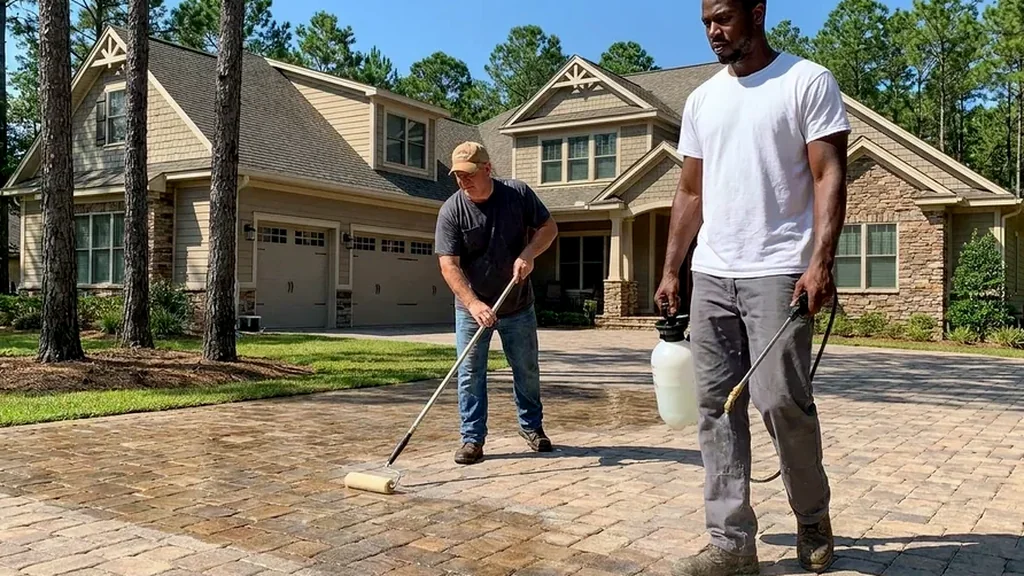
How does a paver sealing job work in Orange City?
Start with a close look
Photos and notes cover each surface, from the front walk to the pool deck. The contractor marks lifted pavers, thin joints, rust and green patches. You get a price in writing and keep it. At the same visit the contractor takes measurements, so your Orange City price rests on actual square feet. If a gate, a pet or a visitor matters on work day, say so ahead of time.
Clean off the years
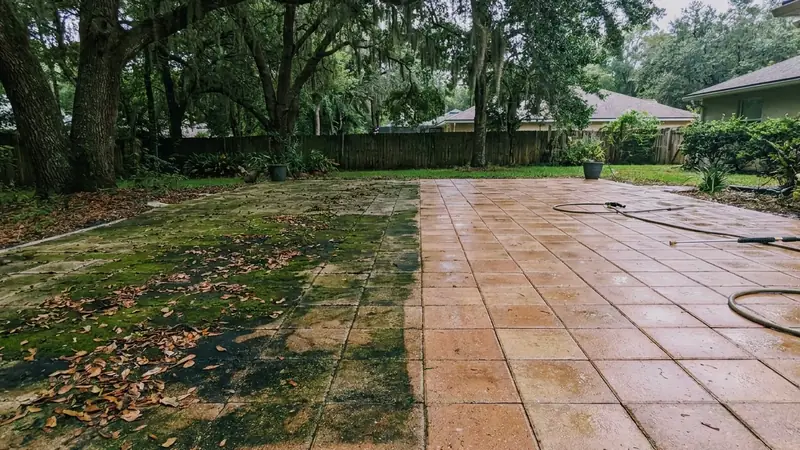
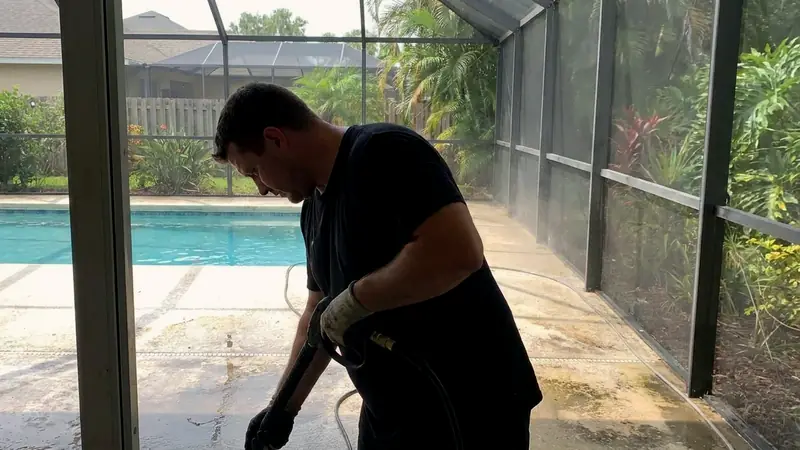
The wash takes off grime, algae and any old film. The pressure suits the paver so the joints are not blasted empty. Rust and oil spots are pre-treated before the main pass. Wash water runs toward the lawn instead of pooling at the front door, and that also speeds up drying. The wash stays off flower beds and shrubs where it can.
Hold for dry weather
Humid Volusia days slow drying, so the contractor often returns after a wet stretch. A coat laid over damp stone can cloud or turn white, and that is the one thing worth waiting out. A warm, breezy morning is a good time to let the stone dry, and a muggy one may push the work to the next day. If rain moves in, the day shifts, and you hear about it first.
Top up the sand
New sand is brushed into the joints and set. Tight joints keep older pavers level and leave weeds little to grab. Any sunken spot is reset before this step. A light final brushing clears the faces, so the sealer lands on stone and not on loose grit. Colored joint sand is an option when you want the lines to blend with older pavers.
Seal, then rest
The sealer goes on by spray and roller for even coverage. Light foot traffic is fine after a few hours. Keep cars off roughly a day, and watch the sprinkler timer. Your invoice names the product, which makes the next coat easy to match years from now. Cure times come in plain words, so you know when the family cars can return.
Complete paver services in Orange City
The work begins with a wash that lifts dirt, algae and old film from the surface. The contractor then waits for the pavers to dry fully. Sealer cannot go over a damp surface, so a wet week can push the date. To book a free look, ring (386) 666-4204.
Next, new joint sand goes in. Washing removes the old sand, so it has to be replaced before any coat. Lifted or sunken sections are reset first, since sealing locks in whatever is there. If you are weighing bids, reach a contractor at (386) 666-4204 to add one more.
The finish is your choice. Matte reads as natural, and a wet look shows more shine and wear in the drive lanes. Water-based sealer cannot go over solvent-based sealer, so the contractor needs to know what is down now. Dial (386) 666-4204 and describe what you see.
Timing follows Volusia weather. June through September is the wettest stretch, so other months often suit coating better. Cars stay off about a day, and foot traffic is usually fine within hours. You can ask for a free estimate and ask for the next dry window.
Questions to ask before you hire
- Will moss and algae in the joints come back after you clean?
- Will you note the date of each coat, so I know when to book the next one?
- My sprinklers run on reclaimed water, so will it leave marks on the sealed pavers?
- Can you give me one price for a simple re-seal and a separate one if the old coat has to be stripped?
- Does the job change if my pavers are laid in a herringbone pattern?
- Can you tell me the cure time in writing, so I know when the movers can bring the truck in?
- If I list the house this spring, should I seal before the photos or after?
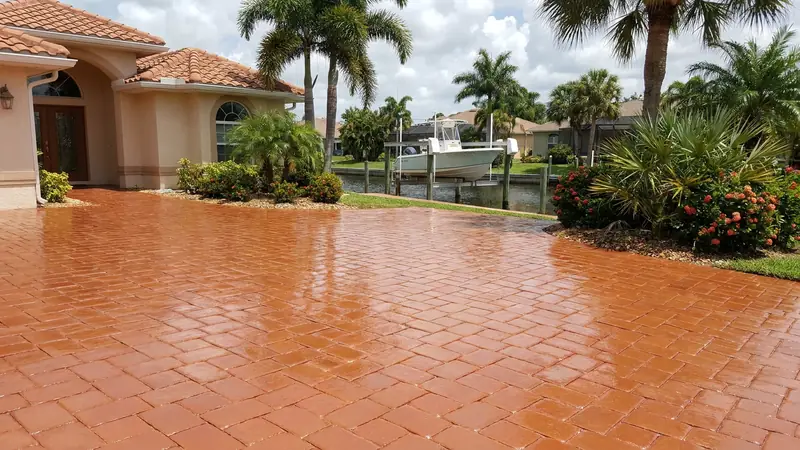
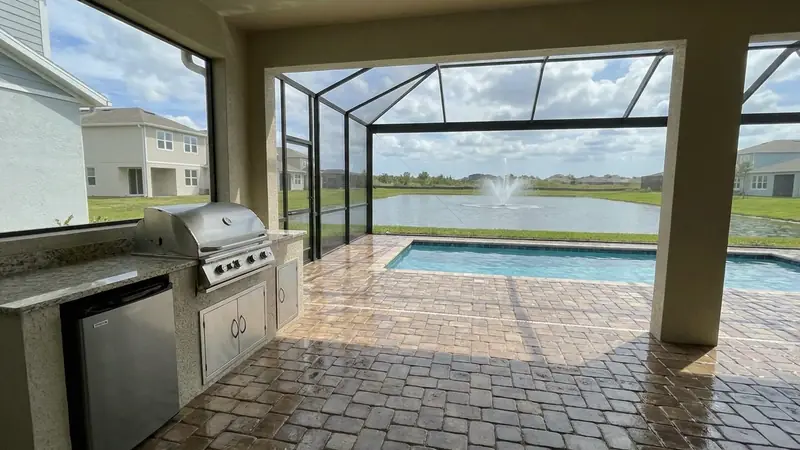
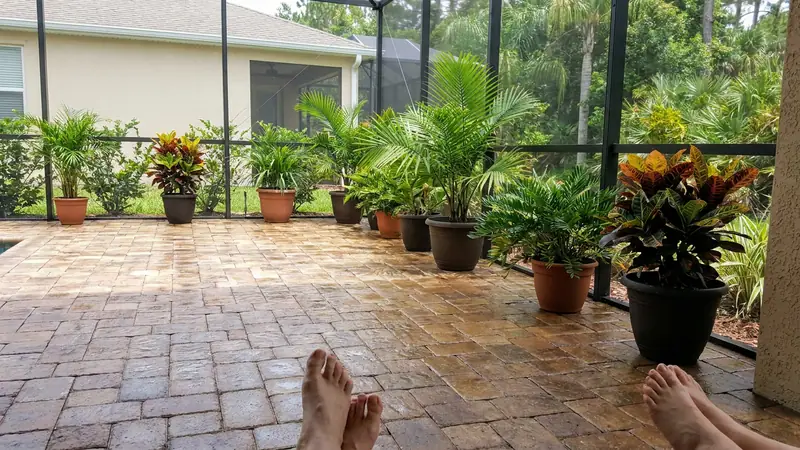
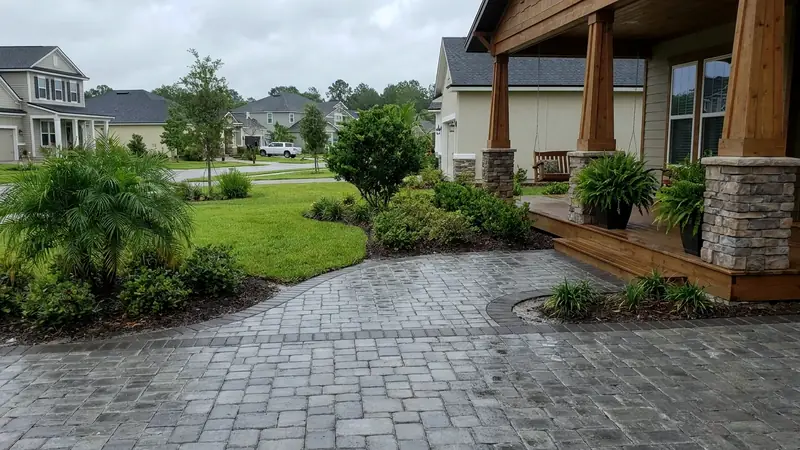
What do sealed pavers look like around Orange City?
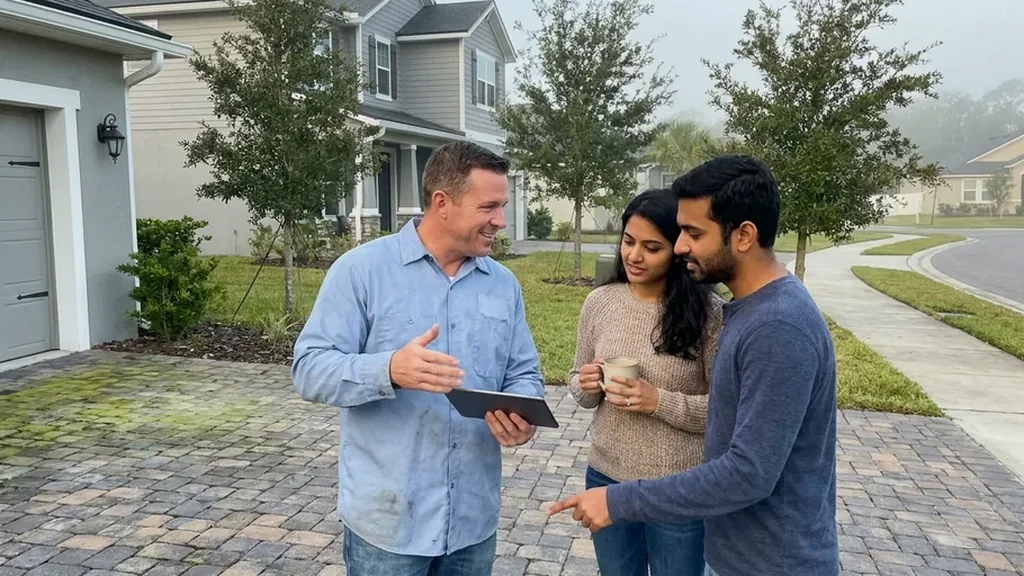
Why local matters in Orange City
A contractor who knows Orange City knows the older streets near the Historic District, where pavers have weathered many summers. That shapes what gets reset and what simply gets cleaned. Ask how old sealer is handled. To get going, call (386) 666-4204.
Weather is the second reason. DeLand, nearby in Volusia County, gets about 55 inches of rain a year, most of it from June to September. A local crew plans coats around those months. You can ask for a free estimate to ask about timing.
A nearby contractor is also easy to reach for follow-up. If a spot looks odd after the first big rain, a quick call sorts it out. Phone (386) 666-4204 for a free look at the pavers.
What is Orange City known for, and why does it matter for pavers?
Orange City was incorporated in 1882 and named for its orange groves, which the Great Freeze wiped out twelve years later. Its water won top honors at the 1904 Louisiana Purchase Exposition. The 1876 Heritage Inn is the oldest operating hotel in Volusia County. If you are curious about cost, you can dial (386) 666-4204.
Blue Spring State Park lies west of the city, and its spring runs about 73 degrees year round and draws manatees in winter. The park had 575,769 visitors in fiscal year 2022-23. A park that draws crowds like that sits a short drive away, so tidy yards stand out. Ring (386) 666-4204 if you would rather talk.
Frequently Asked Questions
Is it good to seal pavers in Orange City, Florida?
In most cases, yes. DeLand, nearby in Volusia County, gets 55.49 inches of rain a year, and sun is strong from June to August. A sealed paver keeps its color and sand better through both. That matters on a front walk that neighbors see every day. It also keeps a tidy entry in front of the house, which neighbors and guests notice first.
How much does it cost to have pavers cleaned and sealed in Orange City?
Published figures for this part of Florida run $1.50 to $3.00 per square foot to clean, sand and seal. Size, condition and old sealer move the total. A free estimate gives you the written number. Ask for the area in square feet so every bid is measured the same way. Two bids with different areas are hard to compare, so ask each contractor to list the square footage.
Is it a good idea to pressure wash pavers in Orange City?
Yes, when the pressure is matched to the paver. Too much blows joint sand out. After the wash, fresh sand goes in and the surface dries before sealing. Pressure is chosen to suit the paver, and the contractor handles that setting. Heavy pressure is the usual way joints get emptied, which is why settings matter more than power.
Is it better to spray or roll paver sealer?
A job normally uses both. Spraying covers the face quickly, and a roller afterward works product into the joints, according to a Jacksonville company. That avoids puddles. Spraying alone can leave too much coat on textured stone, and rolling alone can leave lap marks. Texture changes how much sealer a paver takes, so a rough brick may need a second pass.
Can brick pavers in Orange City be pressure washed?
They can, with the right nozzle and pressure. Brick pavers soak up sealer, so a never-sealed brick surface may take an extra coat. The contractor checks the surface first. A small test patch shows how the stone drinks the first coat. The coat on the brick should be checked first, since old sealer can limit what goes on top.
How often should Orange City pavers be resealed?
A typical quote runs two to five years from coat to coat. Sun, rain and sprinklers can shorten it. Water that sinks in and leaves the paver dark shows the old coat is finished. A sprinkle on a dry day tells you whether the old coat still works. If water beads on a dry day, the coat is working, and the recoat can wait a while.
Do I need to be home when the estimate is done?
No. A Jacksonville paver company says homeowners do not need to be home. The written number follows after the visit. No one needs to be home for the first walk-around. The written price follows the visit within a day or so, and it lists each surface.
Will sealer change how my pavers look?
It can. Matte looks natural. A wet look darkens and deepens color but shows scuffs sooner. Pick the finish before the job starts. A trial corner out of sight shows the finish before the whole job. The choice is yours before the first coat goes down, and a sample patch can settle it.
How long until I can drive on sealed pavers in Orange City?
Light foot traffic is generally fine once a few hours have passed. Cars wait roughly a day. Humidity and shade can stretch the timing. Keep pets off the surface until the contractor clears it. Foot traffic comes back first, then cars, and the contractor tells you which hour is which.
Does sealing stop weeds in Orange City paver joints?
It helps. Weeds start where joints widen and soil gets in, and cleaning and sealing discourage them. Full joints and a sealed face give weeds less to hold. Pulling weeds before the wash helps the new sand stay put. Loose sand sweeps in after the wash, and any extra is brushed away once it settles.
What causes rust stains on Orange City pavers?
Often irrigation water. University of Florida guidance says most Florida well water carries a lot of iron, and irrigating with it leaves orange stains. Treatment comes before sealing. A rust spot that has sat for a season is harder to lift than a new one. The treatment comes before sealing, and some marks fade over a few weeks afterward.
Are older Orange City pavers worth sealing?
Often yes. Older pavers may need lifted sections reset and joints refilled first. Sealing over a sunken spot only locks the problem in. Once the surface is clean, the contractor can tell which spots are worth keeping. Some spots can be reset and others left alone, and the estimate says which is which.
Nearby areas we serve
Ready for a Free Estimate in Orange City?
Call (386) 666-4204 and tell us about your pavers.
Free, no obligation